It’s one of the most common questions I get asked:
Which is better – corks or screw caps?
Does it affect the quality of the wine?
Is cork still seen as more prestigious?
The honest answer? Both closures have their pros and cons.
What was once a question of prestige now reflects broader changes in wine culture and production. European wines — Old World wines — still tend to favour corks, reflecting their traditional values. Meanwhile, New World wines — from places like Australia and New Zealand — have embraced screw caps as a sign of innovation and reliability.
(For a deeper dive into how Old World and New World regions differ in style and philosophy, check out my previous post on Old World vs. New World wines.)
So, which one is more effective—and what does it really say about the wine inside?

A Brief History of Wine Closures
Cork became the standard wine bottle closure thanks to Dom Pérignon in the 1670s. Before that, wine bottles were often sealed with wooden plugs wrapped in oil-soaked rags, which led to spoilage. When glass bottles became common, Pérignon turned to cork, which offered natural flexibility and an airtight seal — perfect for long-term storage.
Screw caps are a much newer invention. First introduced in 1959 by French company La Bouchage Mécanique, they were originally used for spirits. Screw caps gained traction with Swiss winemakers, and exploded in popularity during the 1970s in Australia and New Zealand.
Why? Because they offered consistency. Unlike natural cork, which can vary in quality, screw caps deliver a reliable seal, reduce the risk of cork taint, and allow bottles to be stored upright — no horizontal ageing required.

The Science of Sealing: What Each Closure Does
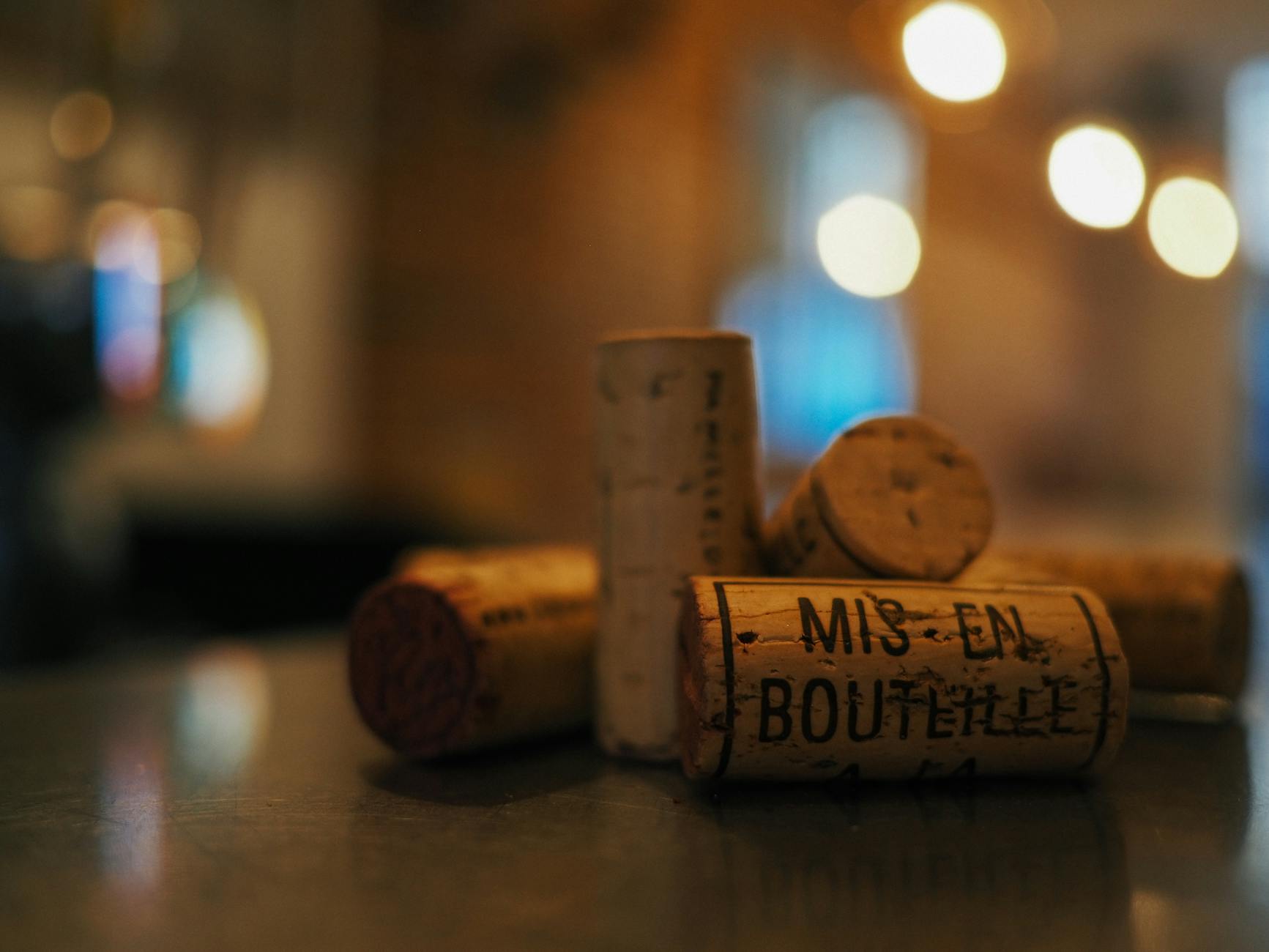
Natural cork (harvested from the bark of cork oak trees) allows a tiny amount of oxygen to interact with the wine over time. This gradual exposure helps certain wines age gracefully, developing complexity and depth. But too much oxygen can spoil the wine.
Screw caps, on the other hand, are designed to be airtight — ideal for preserving freshness. They’re particularly well-suited to wines meant to be enjoyed young, like aromatic whites or lighter reds. Some screw caps have liners that can allow minimal oxygen exchange, but usually less than cork.
What about cork taint?
“Corked” wine is caused by TCA (Trichloroanisole), a compound that gives off musty, damp-cardboard aromas. Even a small amount can ruin an otherwise great bottle. Screw caps eliminate this risk entirely.
Which Wines Suit Which Closure?
Cork closures are generally preferred for age-worthy wines — those with enough structure, tannin, acidity or sugar to evolve over time. These include:
- Reds like Cabernet Sauvignon, Merlot, and Pinot Noir
- Structured whites like oaked Chardonnay
- Sparkling wines (which still rely on cork to manage pressure)
Screw caps are ideal for vibrant, fruit-forward wines. Think:
- Whites like Sauvignon Blanc and Riesling
- Lighter reds like Gamay or young Pinot Noir
Perceptions and Prejudices
There’s no denying cork carries a sense of tradition and prestige. Its natural appearance and satisfying pop create a tactile ritual that many wine lovers still associate with quality and heritage.
But screw caps are no longer seen as just cheap or utilitarian. Many high-end producers now customise their screw caps to control oxygen exchange and preserve aromatic precision. It’s not just about practicality — it’s a deliberate, stylistic choice.
In fact, many winemakers now customise their screw caps to control oxygen transfer based on the style and ageing potential of the wine. It’s no longer about cost or convenience alone—it’s a strategic decision.

Notable high-end producers using screw caps:
Greywacke – Marlborough, New Zealand
Founded by Kevin Judd (formerly of Cloudy Bay), Greywacke uses screw caps for its entire range — including age-worthy Sauvignon Blanc and Pinot Noir. Their focus on purity and precision aligns with the closure’s ability to preserve freshness.
Pewsey Vale – Eden Valley, Australia
A pioneer of Australian Riesling, Pewsey Vale exclusively bottles under screw cap. The closure protects Riesling’s delicate floral notes and ensures steady, graceful ageing.
Domaine Laroche – Chablis, France
In a bold move that challenged Burgundy tradition, Domaine Laroche switched to screw caps in 2001 — including for Premier Cru and Grand Cru Chablis. Known for their crisp, mineral whites, they believe screw caps better preserve the purity of their wines.
Sustainability and Practicality
Cork’s Environmental Pros:
- Sustainable — the tree isn’t cut down; bark regenerates naturally
- Cork forests support biodiversity, from eagles to lynxes
- Low waste — every part of the cork is used
Cork’s Challenges:
- Climate change threatens cork oak ecosystems
- Skilled labour is required to harvest without harming the tree
- Over-harvesting can cause long-term stress
Screw Cap Sustainability:
- Made from recyclable aluminium
- Lightweight — reduces transport emissions
- Lower cost and more practical for restaurants, outdoor events, or casual settings
Screw Cap Considerations:
- Aluminium production has its own environmental footprint
- Recycling rates vary based on infrastructure and consumer behaviour
- Often ends up in landfill, despite being recyclable
In short: both closures have environmental trade-offs, and both can be sustainable when managed responsibly.

Final Sip: So… Which Is Better?
There’s no universal winner. The “best” closure depends on the wine, how it’s meant to age, the winemaker’s intention — and your personal preference.
Corks offer tradition, elegance, and optimal ageing potential. Screw caps provide consistency, practicality, and are increasingly accepted (and celebrated!) across the wine world.
What matters most is what’s inside the bottle — not how it’s sealed.
Have you noticed a difference between corked and screw-capped wines? Do you have a preference, or does it depend on the wine? Let me know in the comments below!
Discover more from The Curious Cork
Subscribe to get the latest posts sent to your email.
 The Curious Cork